
 Automation
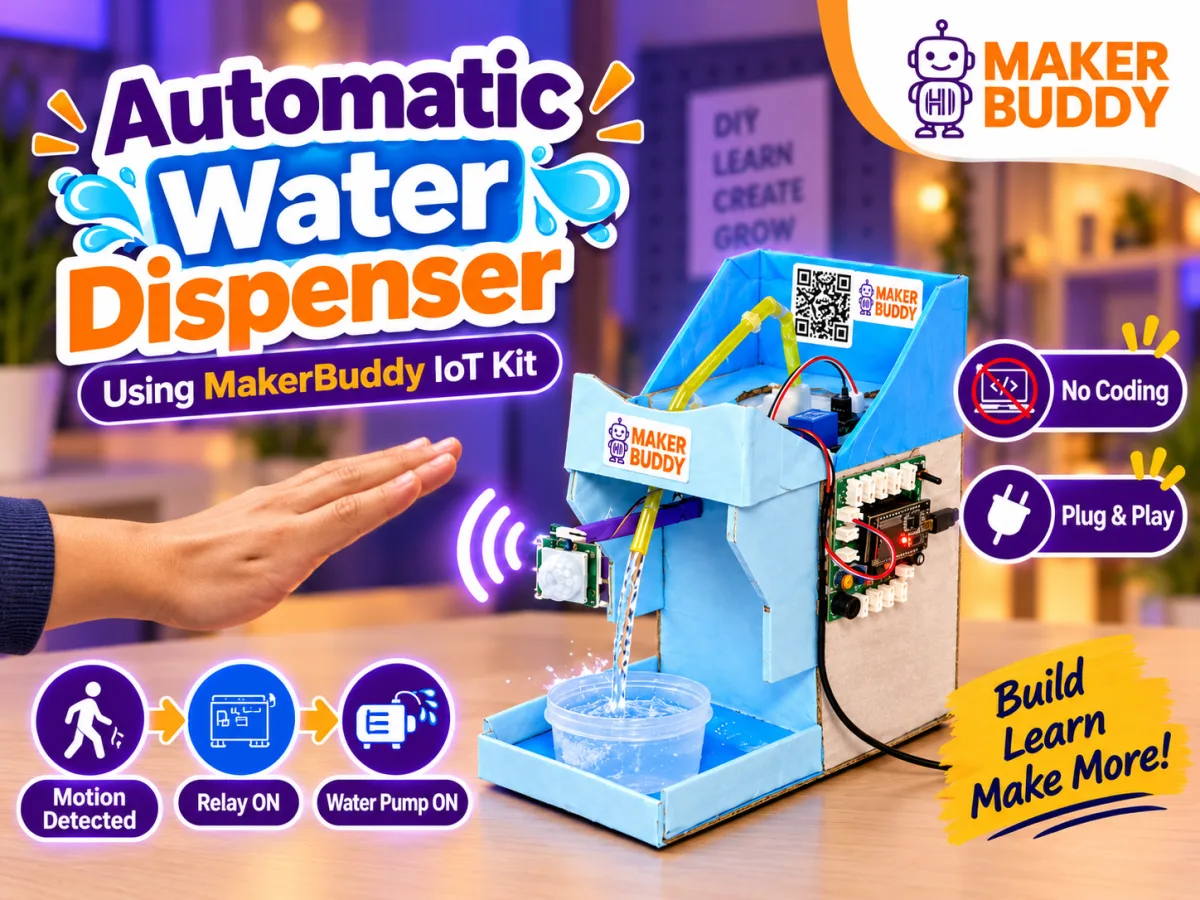
Automatic Water Dispenser
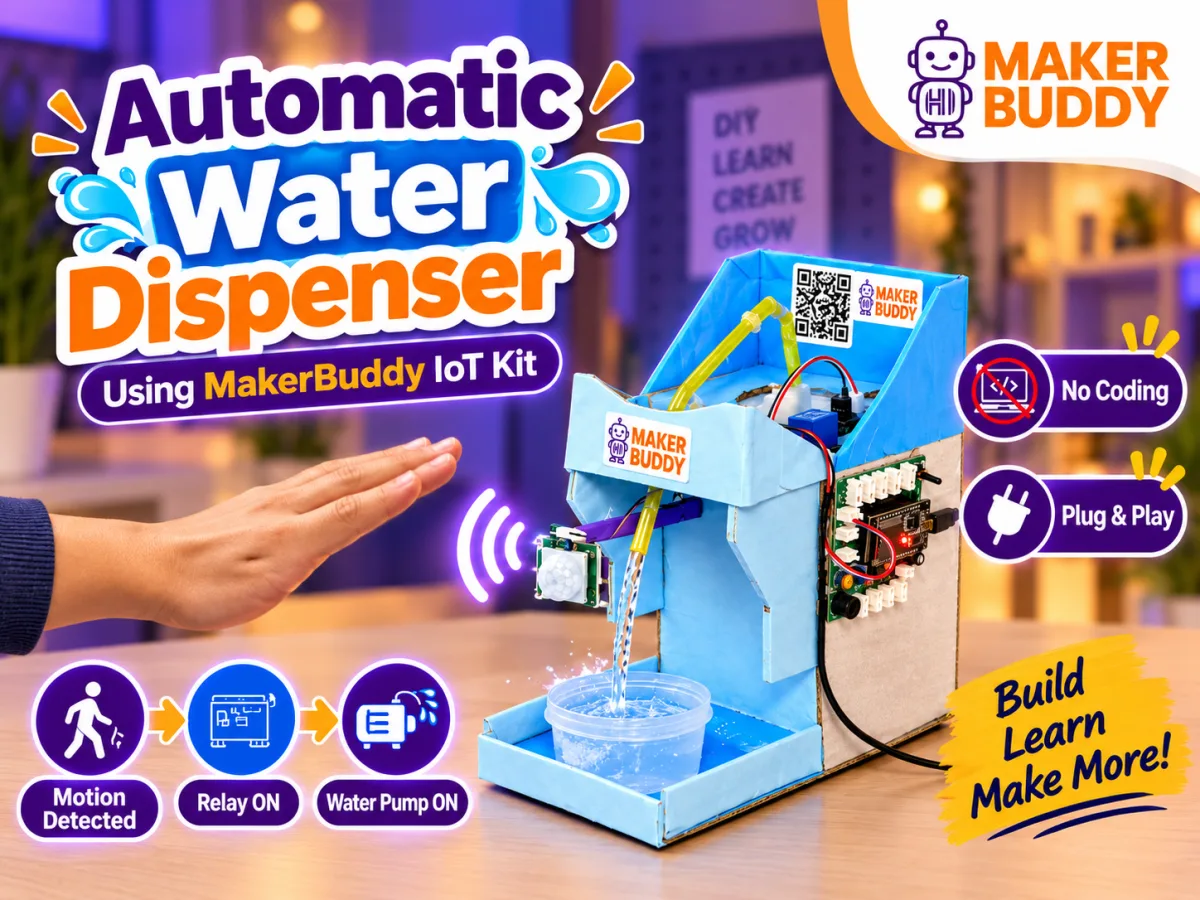
Build a touchless dispenser that detects a hand and switches on a water pump automatically.
Build this projectProject library
Explore 50 practical MakerBuddy projects from first sensor experiments to connected systems, smart home automation, environmental monitoring and playful builds.
Published builds
These ten MakerBuddy projects include complete instructions on Hackster.io. Start with one, understand how its sensors and actions work, then remix it into something new.
AutomationBuild a touchless dispenser that detects a hand and switches on a water pump automatically.
Build this project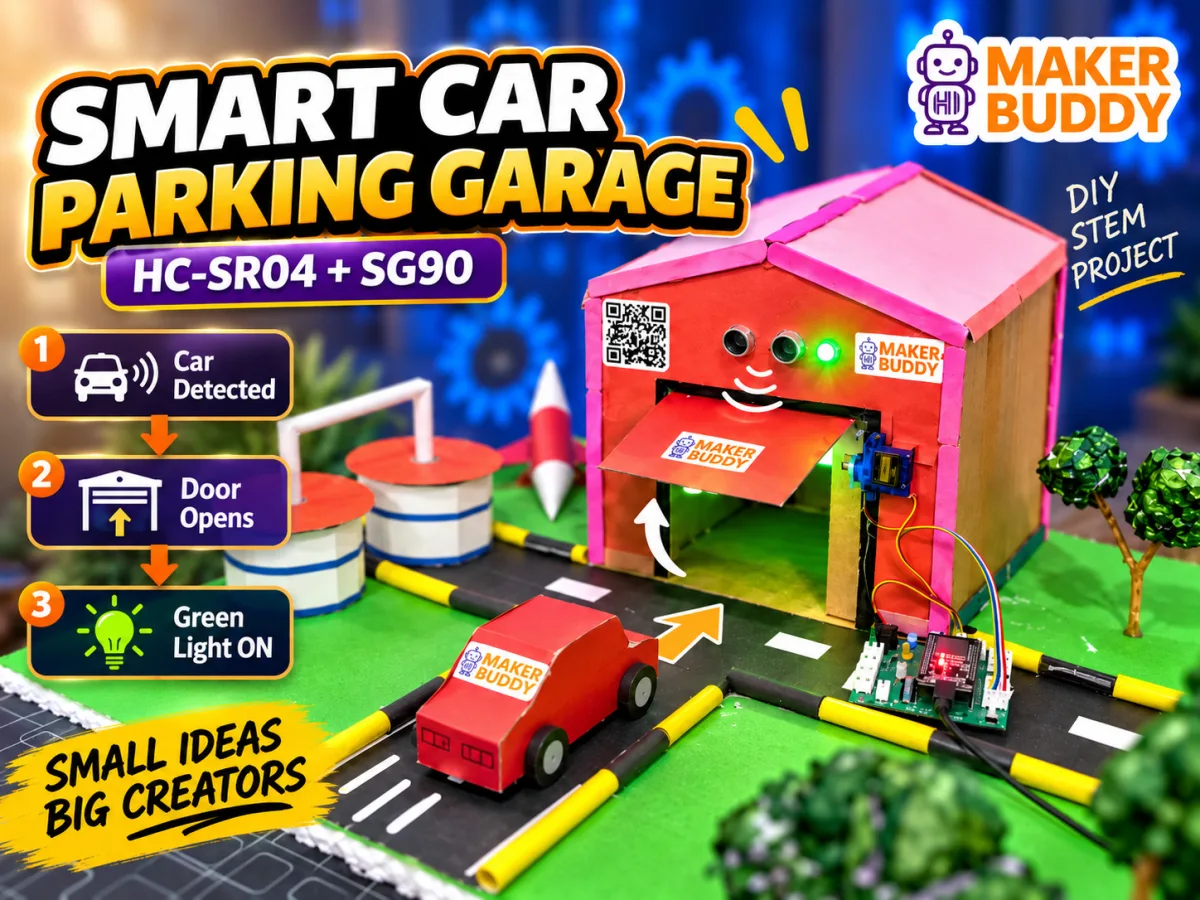 Robotics
Detect an approaching car, open the garage door with a servo, and signal when entry is clear.
Build this project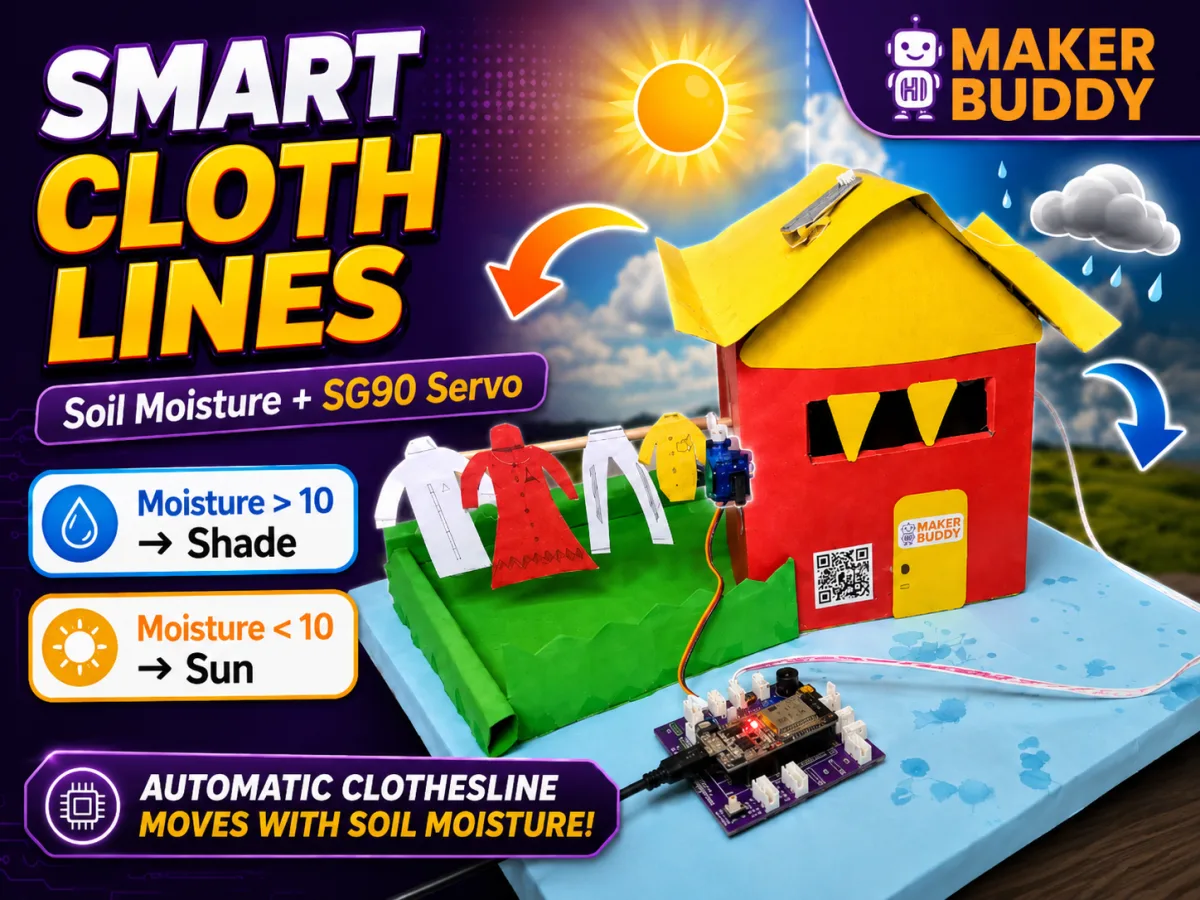 Smart Home
Use a moisture sensor and servo to move model clothes into shelter when rain is detected.
Build this project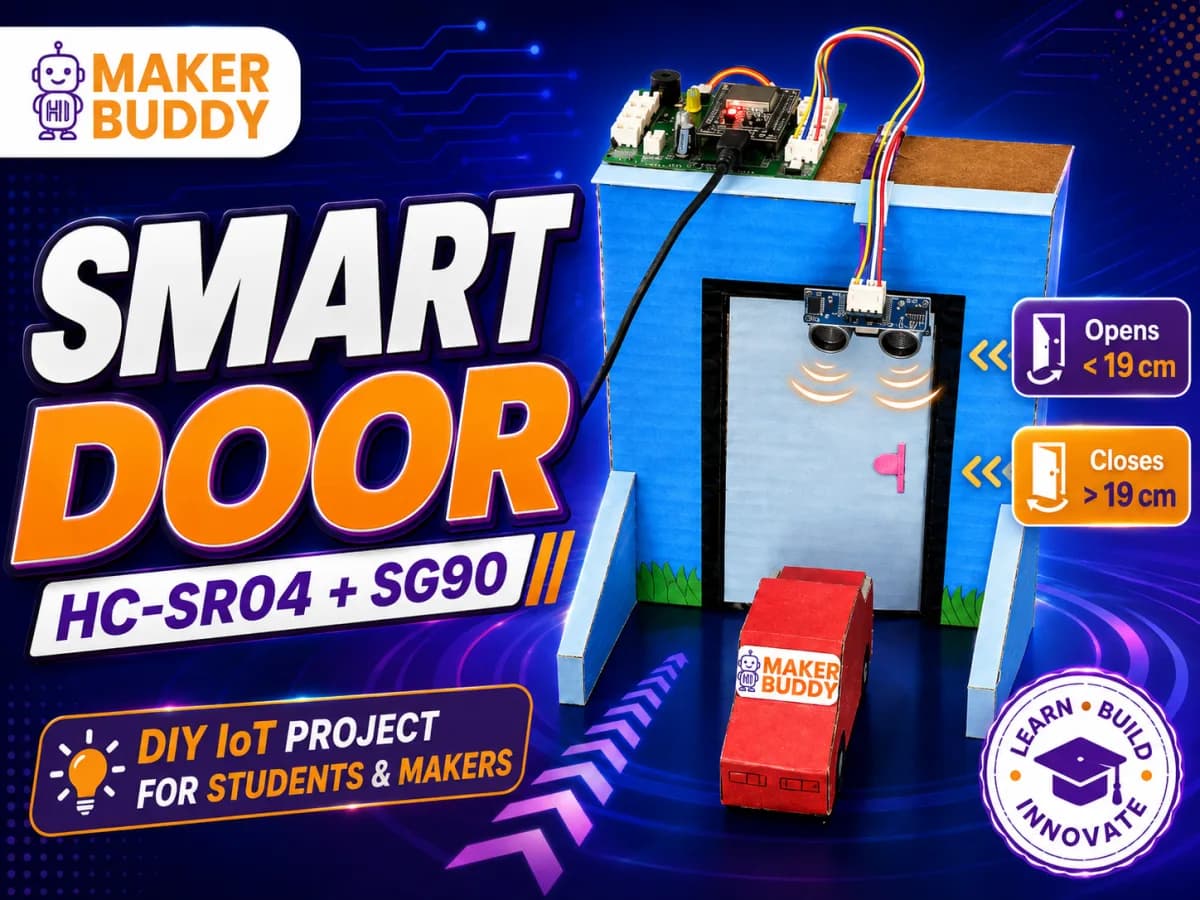 Automation
Sense an approaching object with an ultrasonic sensor and open a model door automatically.
Build this project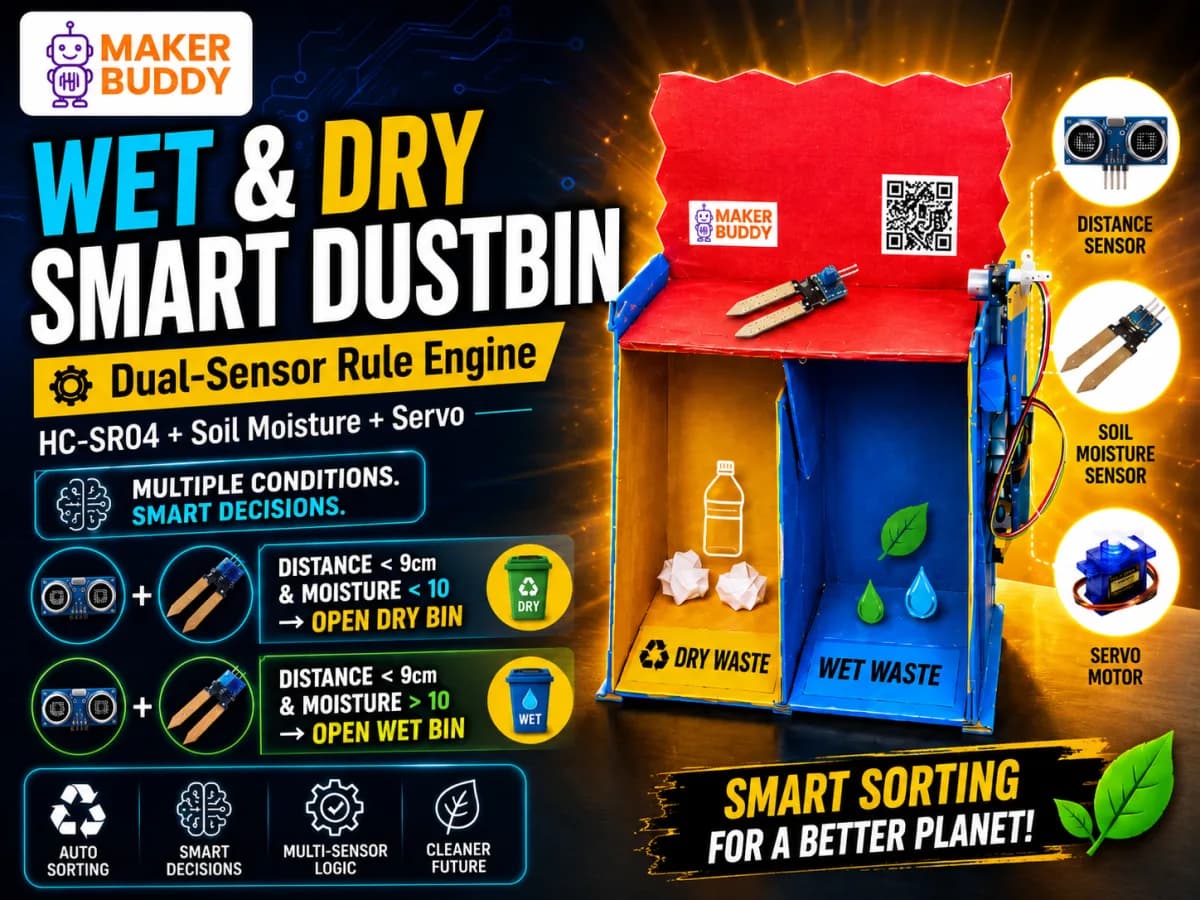 Sustainability
Combine distance and moisture readings to sort wet and dry waste into separate bins.
Build this project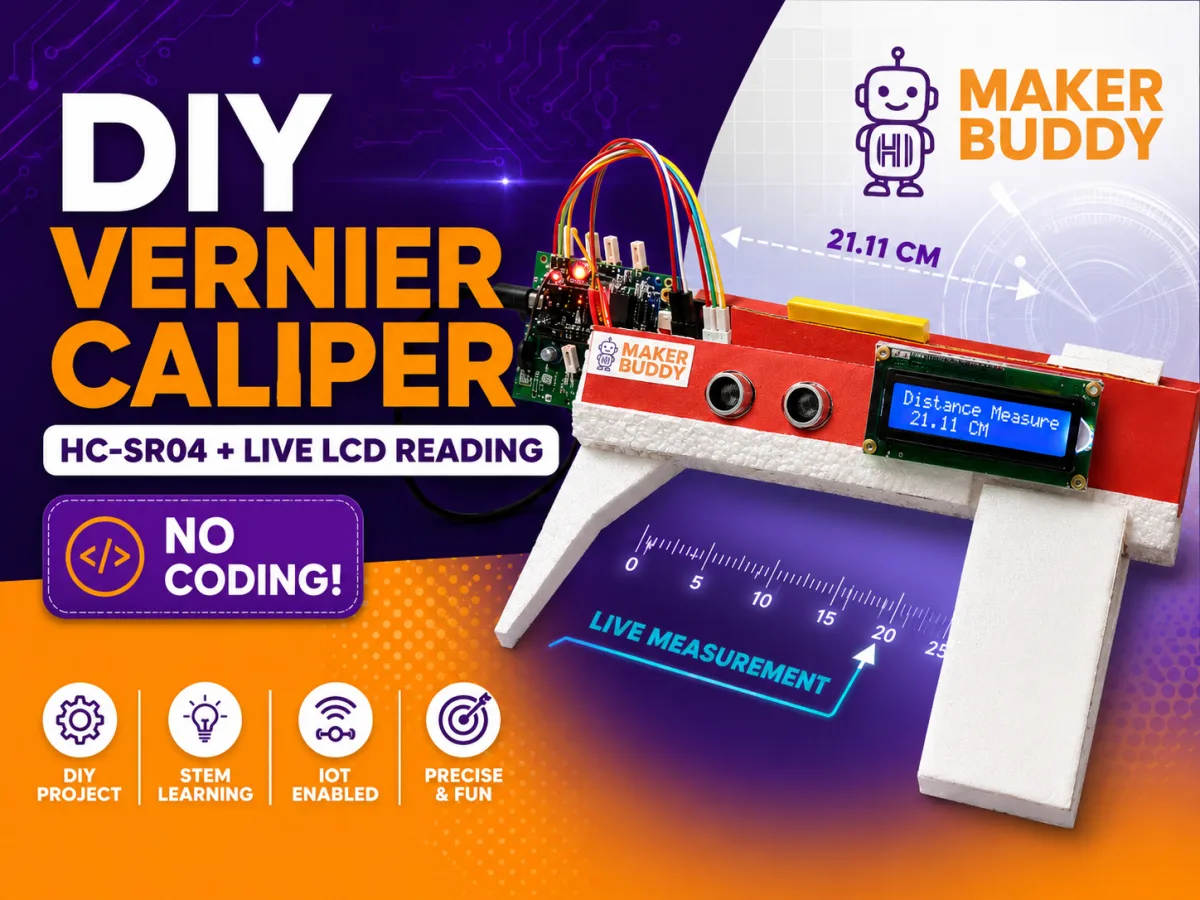 Measurement
Turn an HC-SR04 and 16×2 LCD into a digital measuring tool with live distance readings.
Build this project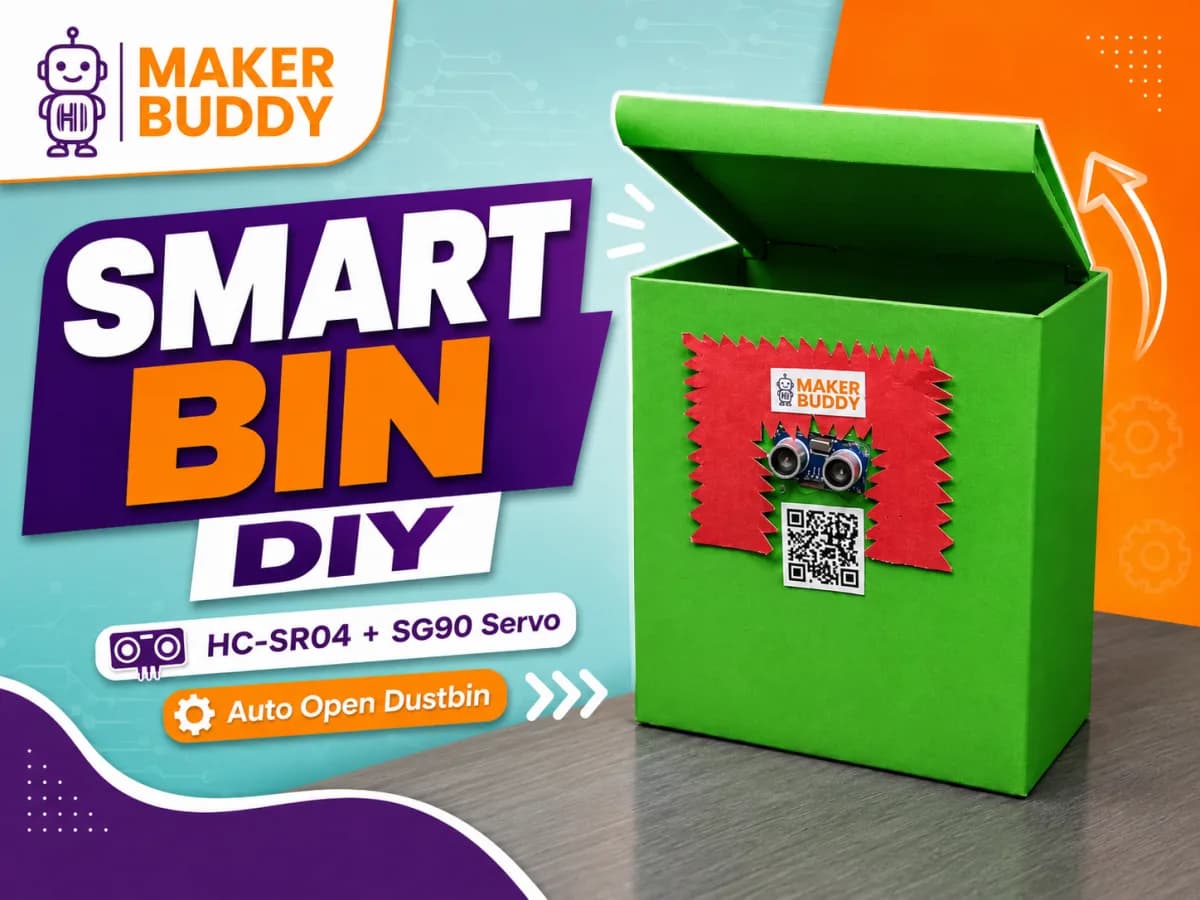 Smart Home
Use an ultrasonic sensor and servo motor to open a model dustbin without touching it.
Build this project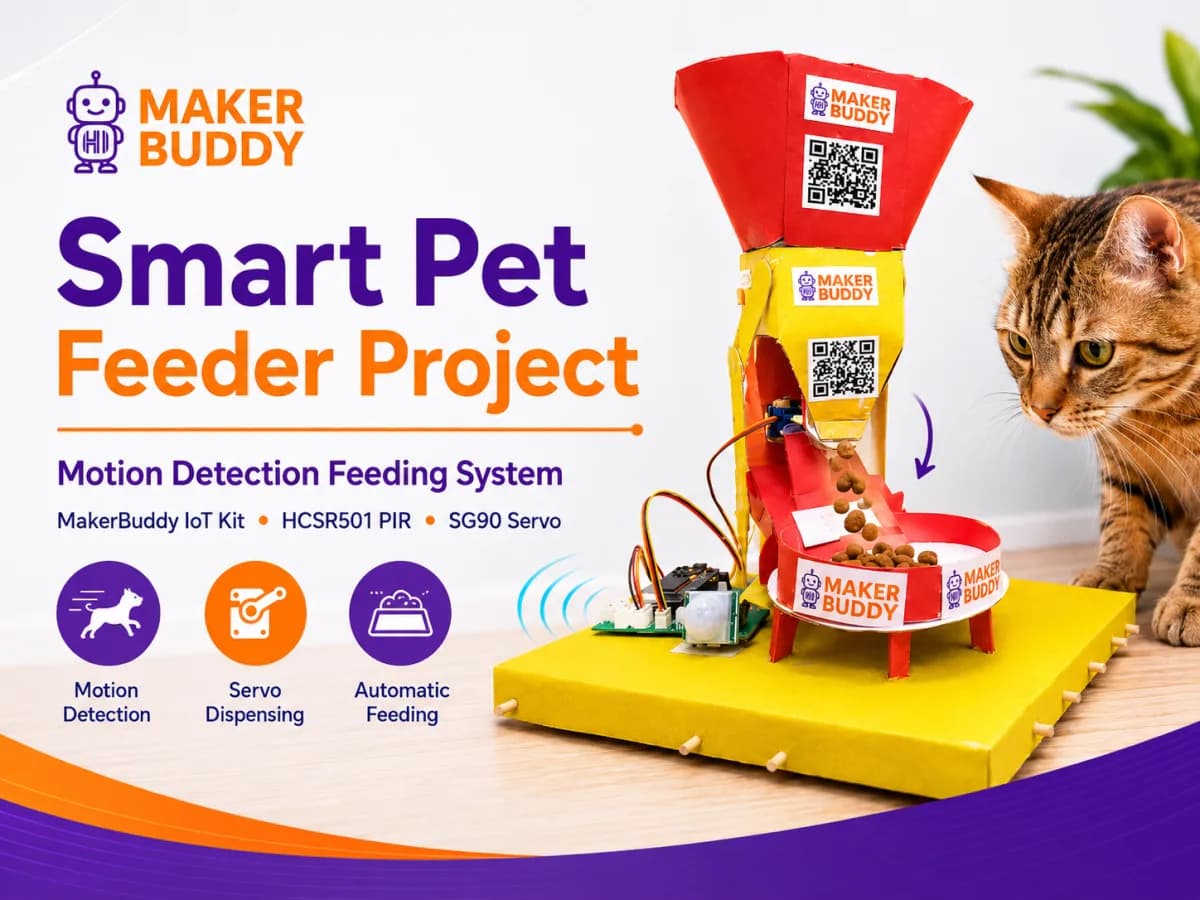 Robotics
Detect a nearby pet with a PIR sensor and use a servo to dispense a measured portion of food.
Build this project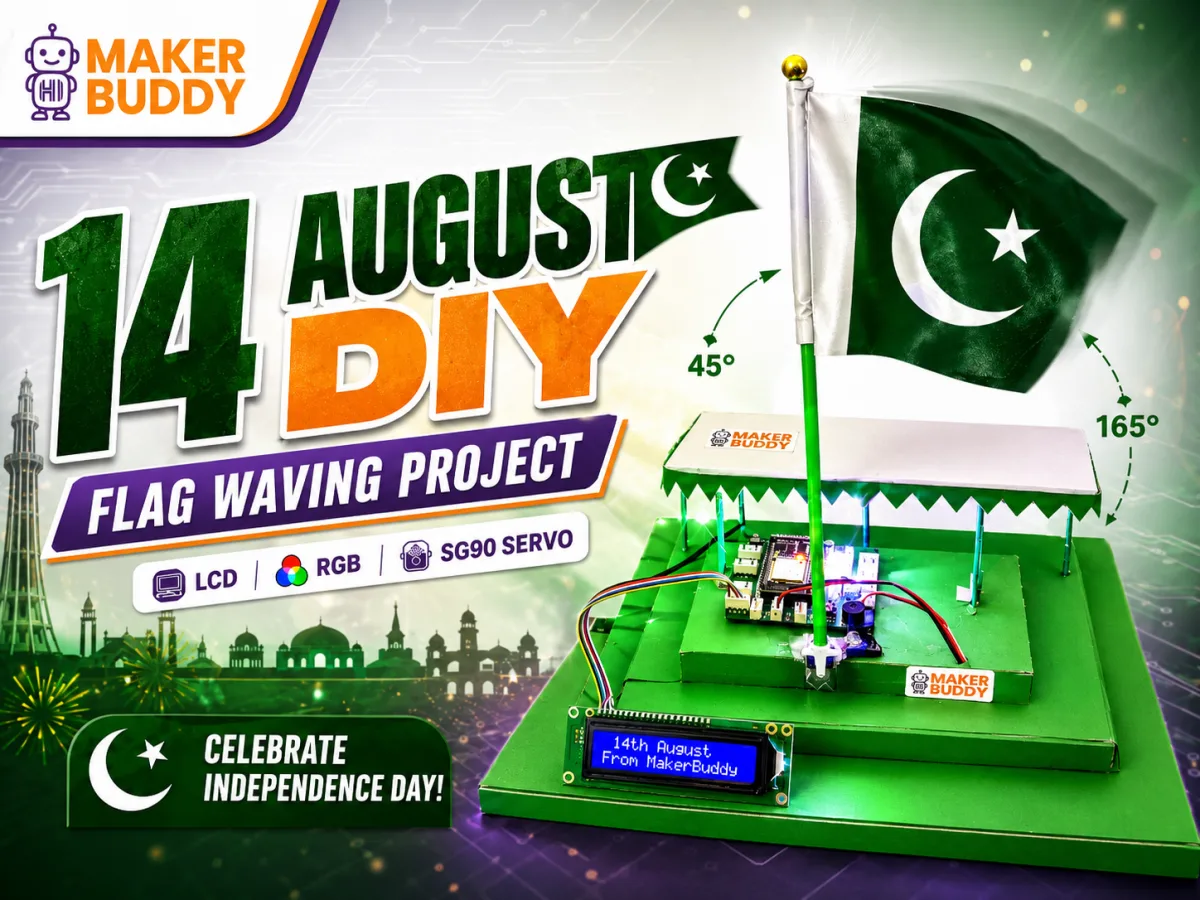 Creative STEM
Combine a servo, RGB lighting and an LCD to create an interactive Independence Day display.
Build this project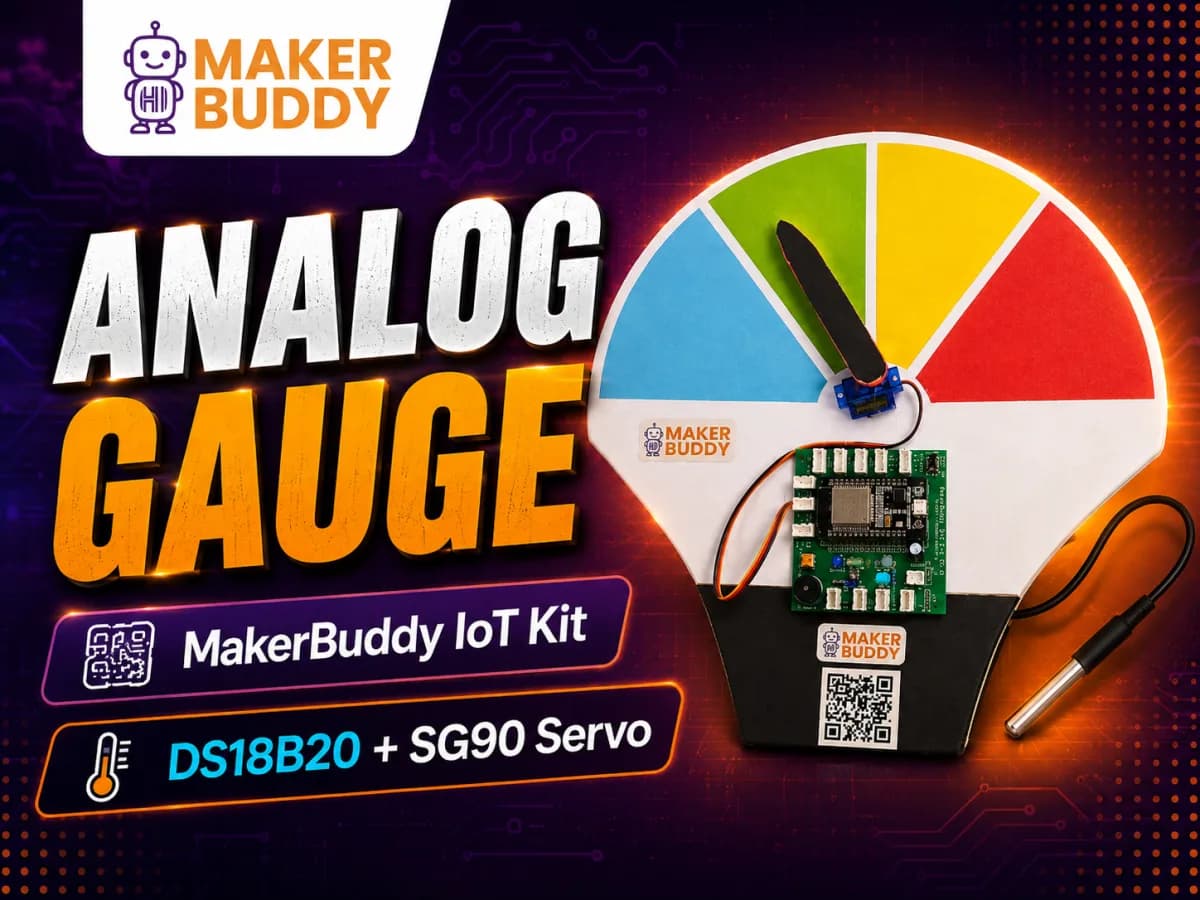 Measurement
Map DS18B20 temperature readings to a servo-driven dial for an easy-to-read physical display.
Build this projectExplore the full library
Choose a theme, then scan the hardware tags to find a project that matches the parts and skills you want to practise.
Start here
Fast, confidence-building experiments with one clear input and output.
Read the light sensor and switch on the onboard LED when the room falls below a chosen threshold. Compare several thresholds and explain why the best value depends on the environment.
Wire the push button as a doorbell trigger and sound the buzzer with a short pattern so it is easy to tell apart from other alerts.
Use the HC-SR04 to sound a warning as an object gets closer, with distinct tones for "caution" and "too close."
Display live DHT11 temperature on the dashboard and log readings across a day to spot patterns caused by sunlight or ventilation.
Map a potentiometer's analog range to LED brightness and describe how PWM produces the dimming effect.
Adjust red, green and blue channels on the RGB LED to create colors, exploring additive color mixing and saving a palette for later use.
Sweep a servo back and forth like a windshield wiper and adjust speed and range through the dashboard.
Build a simple traffic-light sequence with timed red, yellow and green phases using the LED and RGB outputs.
Trigger the buzzer and an LED flash whenever the PIR sensor detects movement in a room.
Use an LED as the signal and the push button as the response, measuring how consistently a player can react and discussing input debouncing.
Useful systems
Turn sensor readings into practical actions for everyday spaces.
Read temperature from the DHT11 and drive a relay-controlled fan once the room crosses a comfort threshold.
Combine the light sensor and dashboard toggle so a lamp turns on automatically at dusk or on demand.
Watch the MQ-2 gas sensor for smoke or gas buildup and raise a tiered alert as levels climb.
Monitor a capacitive soil moisture sensor and trigger a relay-driven pump or valve when the soil gets too dry.
Pair the PIR sensor with the buzzer and LCD to log the time of each detected entry.
Use a switch or button to show a "do not disturb" state on the LCD and RGB LED, useful for shared rooms or calls.
Fade the RGB LED from dark to bright over a set period to simulate a sunrise-style alarm.
Use the HC-SR04 to guide a car into the exact same parking spot every time with LED distance zones.
Record DHT11 readings on an interval and review the resulting trend on the dashboard.
Use the PIR sensor to increment and display a running visitor count on the LCD.
Connected builds
Bring controls, live readings and events into the browser.
Control the onboard LED or a relay from a phone browser over the local dashboard, no app install required.
Display live DHT11 values on the dashboard and compare local readings against an outside reference.
Trigger a servo-driven hatch from the dashboard to dispense food on a schedule or on demand.
Fire a PIR-triggered notification workflow and document how the WebSocket event reaches an external service.
Drive the RGB LED from dashboard presets or automation rules tied to time of day.
Use a reed switch or PIR placement to report whether a door is open or closed on the dashboard.
Replace the buzzer with an LED flash pattern for notifications in sound-sensitive spaces.
Combine DHT11 and PIR readings into a single dashboard view for temperature and movement in a nursery.
Stream MQ-2 readings to the dashboard with a clear safe/warning/danger visual state.
Sequence the RGB LED and relay outputs into a timed show, controllable from the dashboard.
Investigate
Collect evidence, compare results and explain what the data means.
Monitor a capacitive soil moisture sensor and show a visual or audible alert when the reading drops below a calibrated level.
Compare MQ-2 readings across rooms or times of day and discuss the limits of low-cost gas sensing.
Track how quickly a small enclosure's DHT11 reading returns to ambient temperature to compare insulating materials.
Use the LDR to detect passing shadows and count them as a simple light-based sensor exercise.
Measure button-press reaction time against a randomized LED cue and log results across several trials.
Use analog input readings to compare how different materials or liquids affect a simple conductivity probe.
Use the HC-SR04 as a downward-facing rangefinder to estimate height or fill level.
Sweep the HC-SR04 with a servo to build a simple distance map of a room.
Use DHT11 temperature and humidity together to estimate dew point and explain the calculation.
Track temperature and moisture together to identify when a compost pile needs turning or water.
Play and create
Use the same electronics to make games, instruments and playful interactions.
Show randomized fortunes on the LCD triggered by a button press.
Flash a sequence on the RGB LED and buzzer, then require the player to repeat it with the push button.
Map HC-SR04 distance readings to buzzer pitch to play a touchless instrument.
Add a second button for a two-player reaction game, with the LCD announcing the winner.
Use the LCD, buzzer and PIR sensor to create a simple virtual pet that reacts to attention and neglect.
Use the potentiometer as a dial and the LCD as feedback to build a combination-lock guessing game.
Pass a "hot" state between players using a button, with a random buzzer countdown ending the round.
Use analog skin-response-style wiring on an input pin paired with the buzzer for a lighthearted lie-detector demo.
Practice precise angle control by having a servo trace a sequence of positions on command.
Combine systems
Layer multiple inputs and outputs into a more capable final challenge.
Combine the LDR and PIR sensor so a break in the light pattern or unexpected motion triggers an alert on the buzzer, LED and LCD.
Before you build
A few decisions up front make testing easier and give learners a stronger story to share.
Build with MakerBuddy
Start with prepared hardware, see results quickly, and keep going all the way into code.