
 Automation
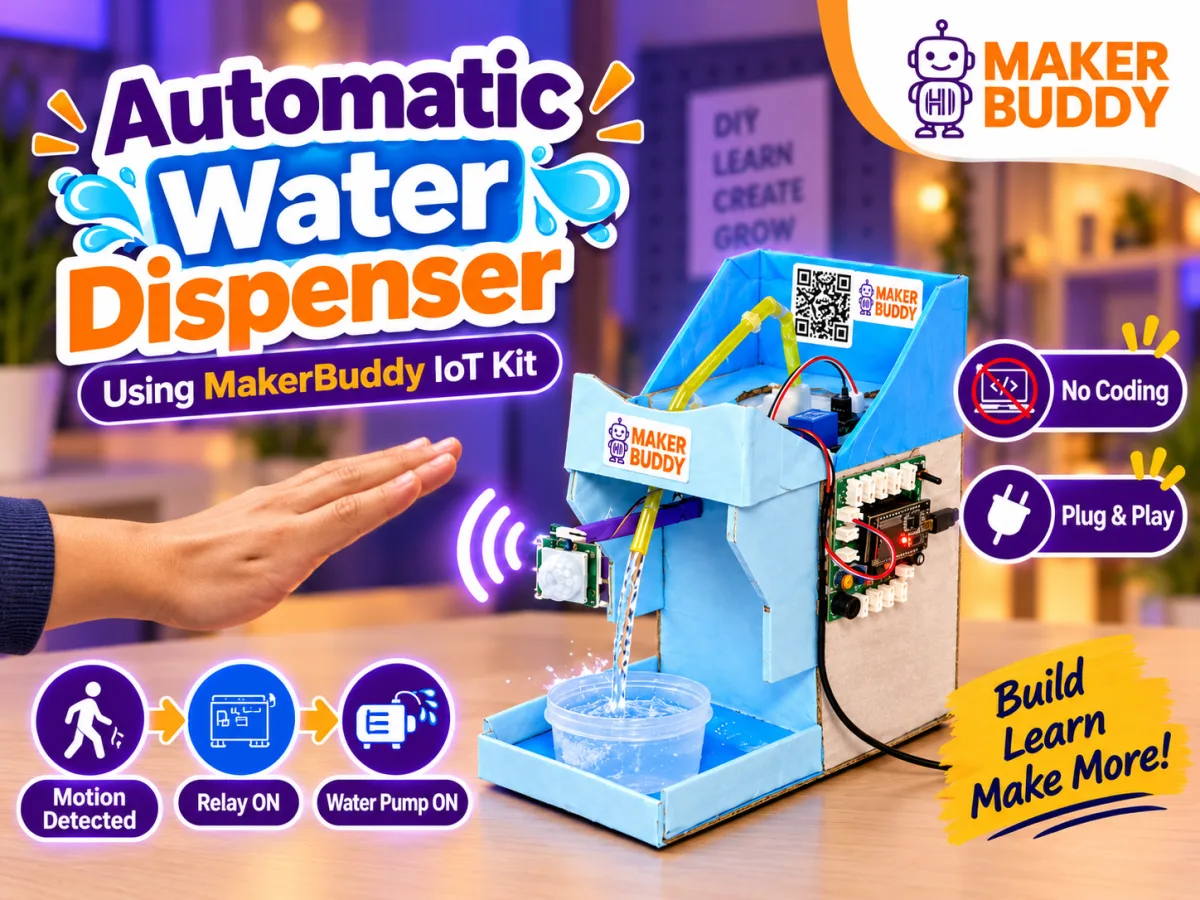
Automatic Water Dispenser
Build a touchless dispenser that detects a hand and switches on a water pump automatically.
Build this projectA STEM hardware & software startup empowering the next generation of makers, engineers, and innovators. Snap-in IoT kits, a no-code web platform, and hands-on curriculum — no messy wiring required.
Traditional kits spend 40 of every 45 minutes debugging wires. MakerBuddy flips that — students spend their time building and learning.
Messy, fragile wiring
Loose breadboard connections and spaghetti wiring confuse students and eat up valuable class time.
Fried components
Bent pins and burnt-out sensors from wrong connections mean recurring costs for schools.
Painful software setup
Installing drivers and libraries across 30 classroom computers is a non-starter for most teachers.
Snap-in connectors
Keyed ports only fit the right way. Build in seconds — no wiring diagrams, no shorts.
Burn-proof & protected
Stable power and protection circuitry keep shared kits alive through years of curious hands.
Zero-install dashboard
The web app runs in any browser over local Wi-Fi. Nothing to download, nothing to configure.
See what makers are building with MakerBuddy, then open the full Hackster.io tutorial and create your own version.
AutomationBuild a touchless dispenser that detects a hand and switches on a water pump automatically.
Build this project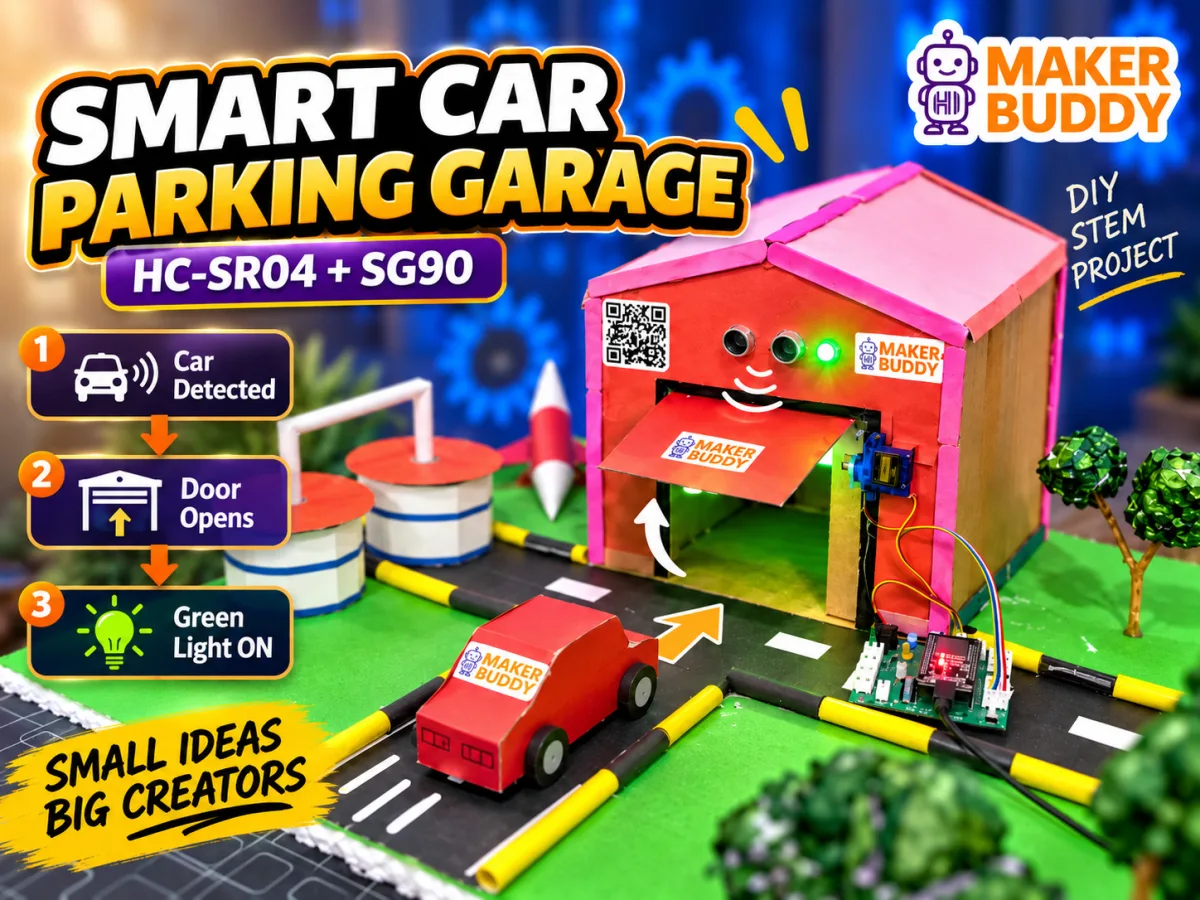 Robotics
Detect an approaching car, open the garage door with a servo, and signal when entry is clear.
Build this project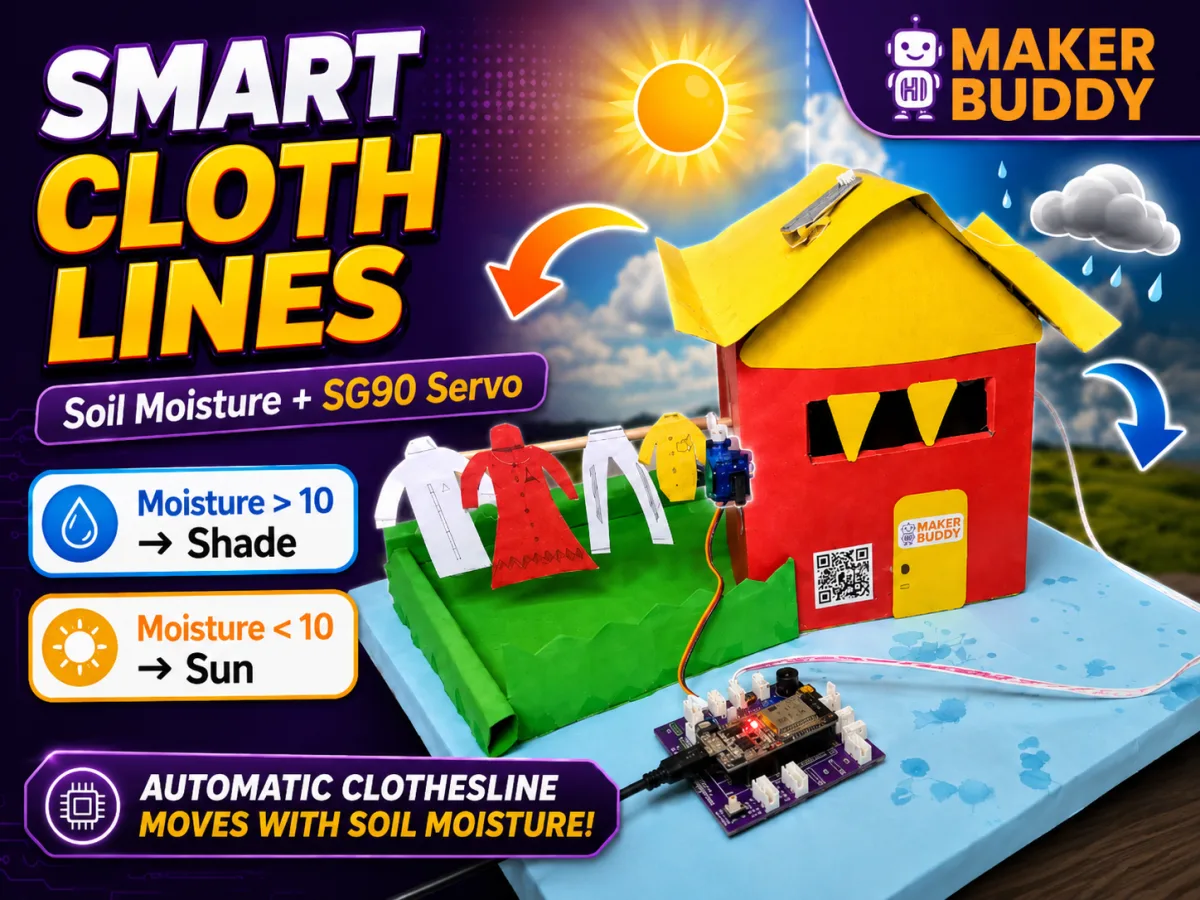 Smart Home
Use a moisture sensor and servo to move model clothes into shelter when rain is detected.
Build this project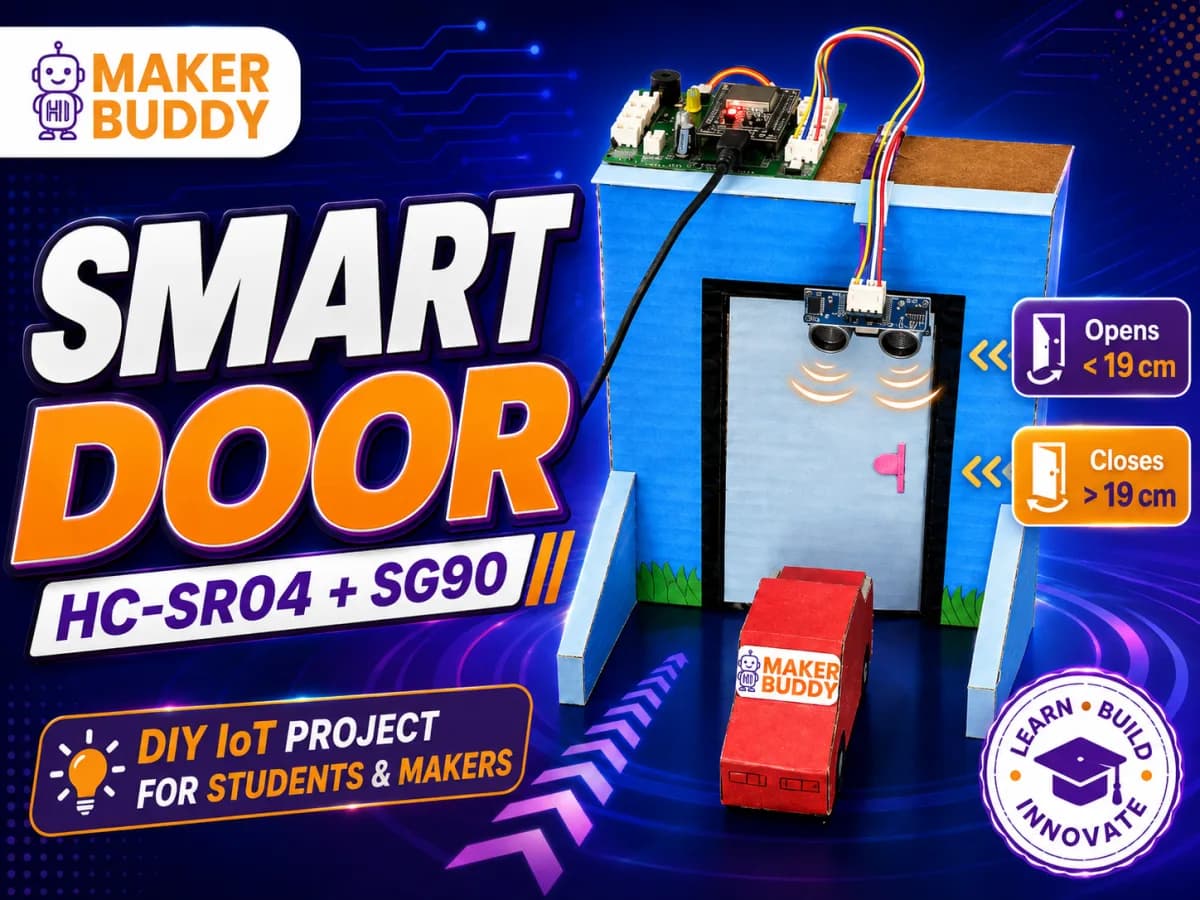 Automation
Sense an approaching object with an ultrasonic sensor and open a model door automatically.
Build this project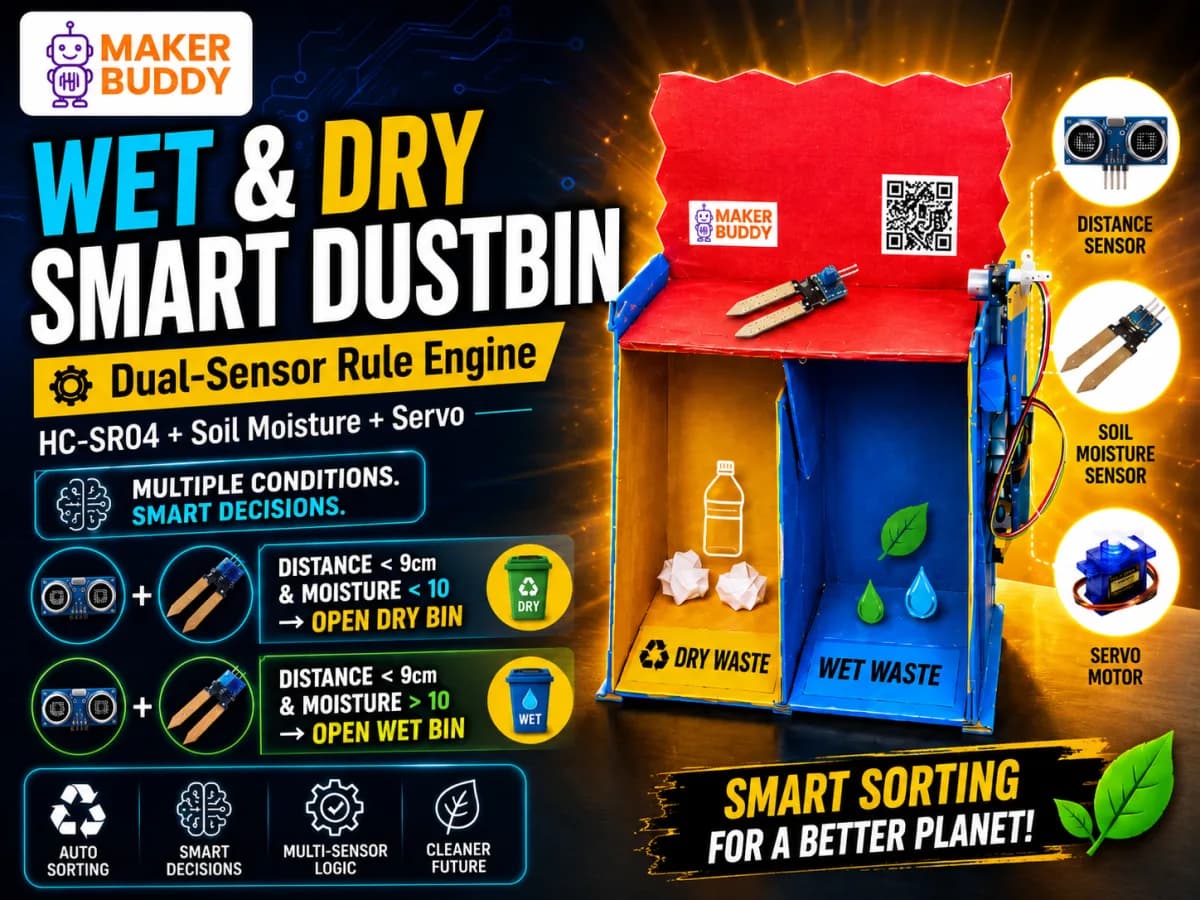 Sustainability
Combine distance and moisture readings to sort wet and dry waste into separate bins.
Build this project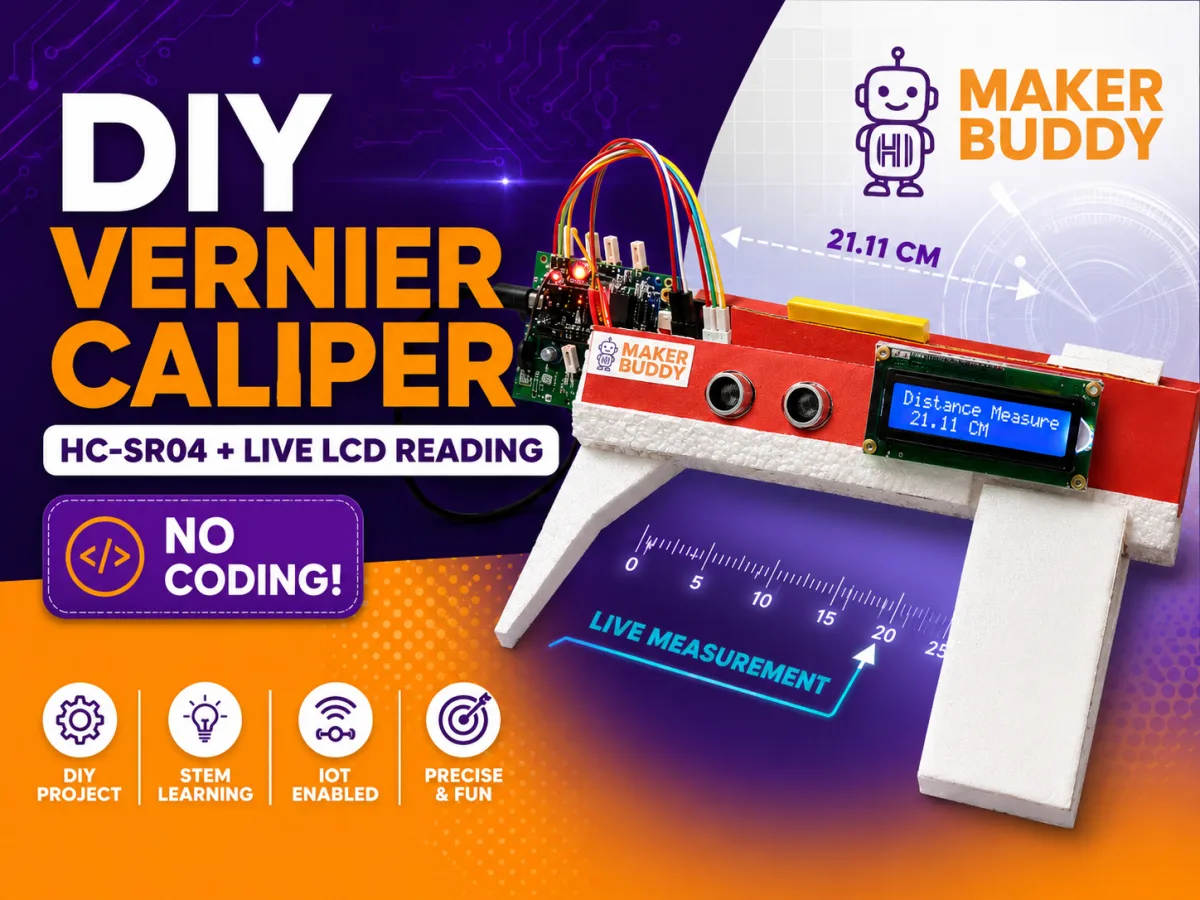 Measurement
Turn an HC-SR04 and 16×2 LCD into a digital measuring tool with live distance readings.
Build this projectMost kits give you parts. MakerBuddy connects hardware, software, and learning into a single beginner-friendly loop — so skills compound instead of stalling at the wiring stage.
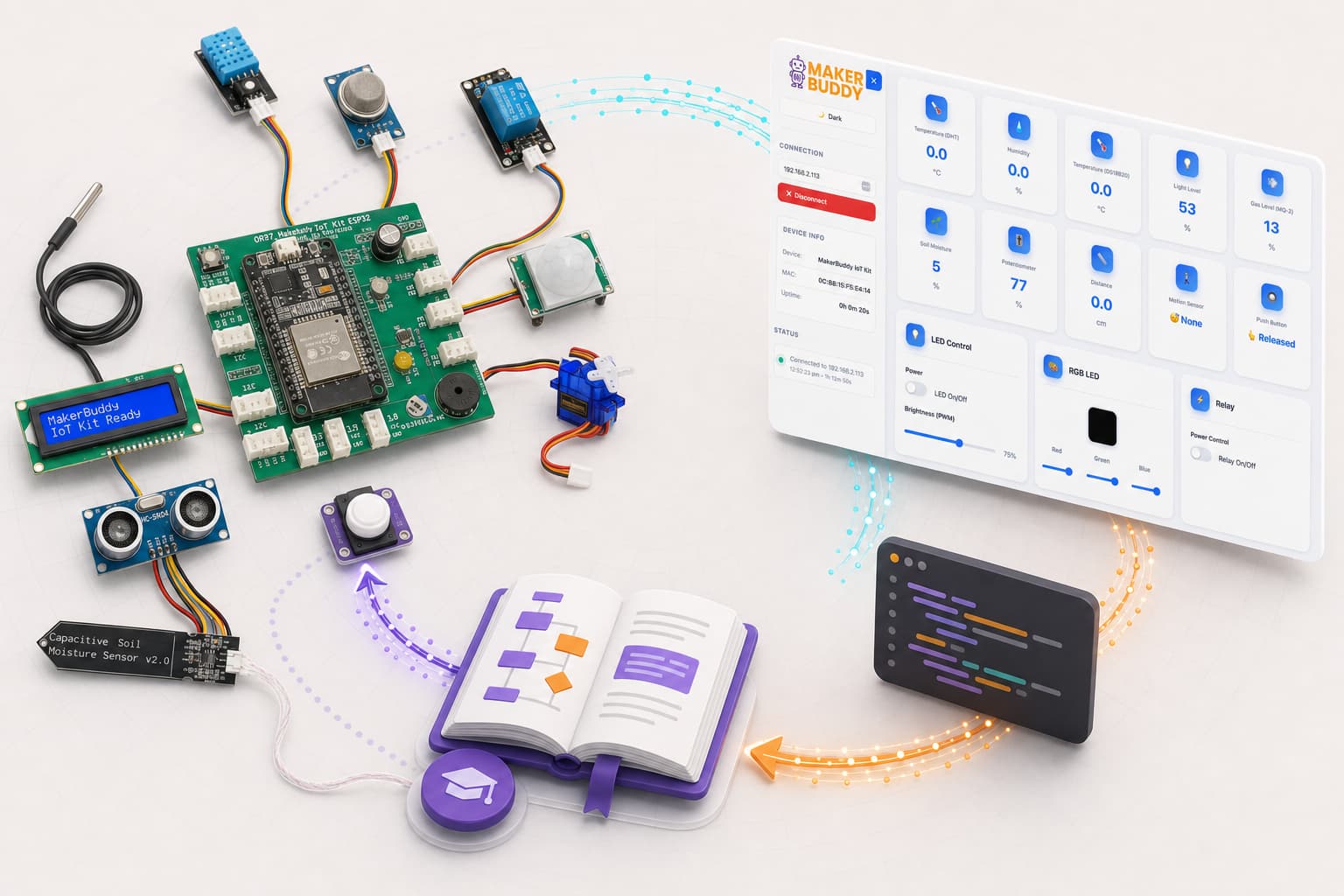
An all-in-one ESP32 board with onboard and modular sensors. Snap components in like building blocks — no breadboards, no loose wires, no fried pins.
A browser dashboard that runs over local Wi-Fi. Read live sensor data, control actuators, and build automations — no installs, no internet required.
Drive servos, relays, and motors, then teach your build to react on its own with a visual rule engine. Real robotics, minus the intimidating setup.
A 32-week project-based course with lesson plans, guides, and teacher resources — classroom-ready and completely free for educators.
Start code-free on the dashboard, then graduate to real programming with documented examples, firmware, and open APIs as confidence grows.
Open-source design files on GitHub plus an active maker community running events, Discord, and workshops for schools and clubs.
Everything a learner needs to go from idea to working invention — the board, the sensors, the dashboard, and the lessons.
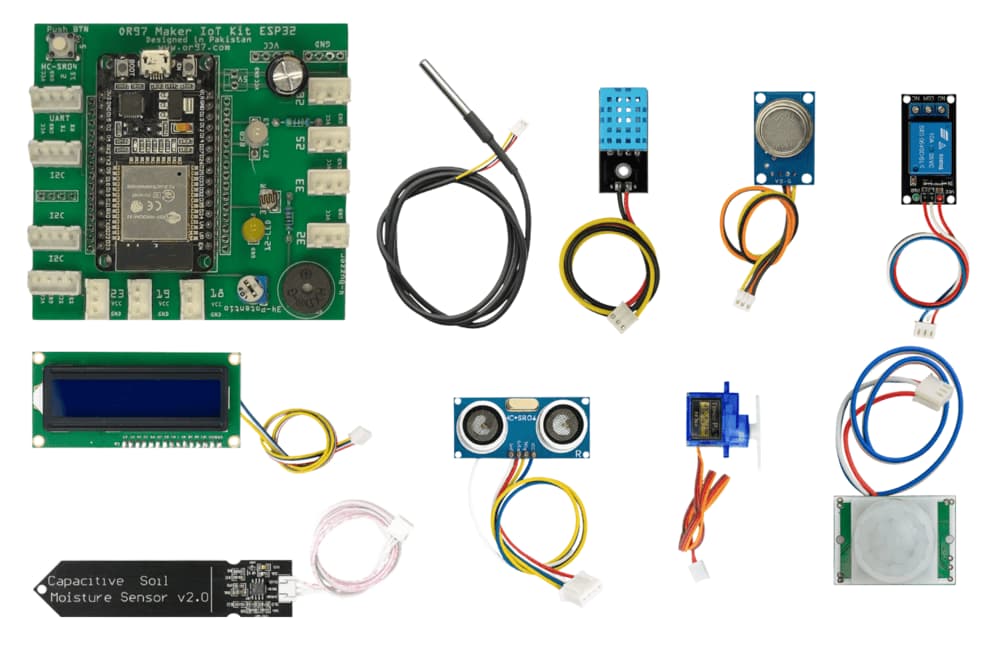
An ESP32-powered learning board with built-in sensors and snap-in connectors for temperature, motion, gas, distance, soil, light, servos, relays, and more.
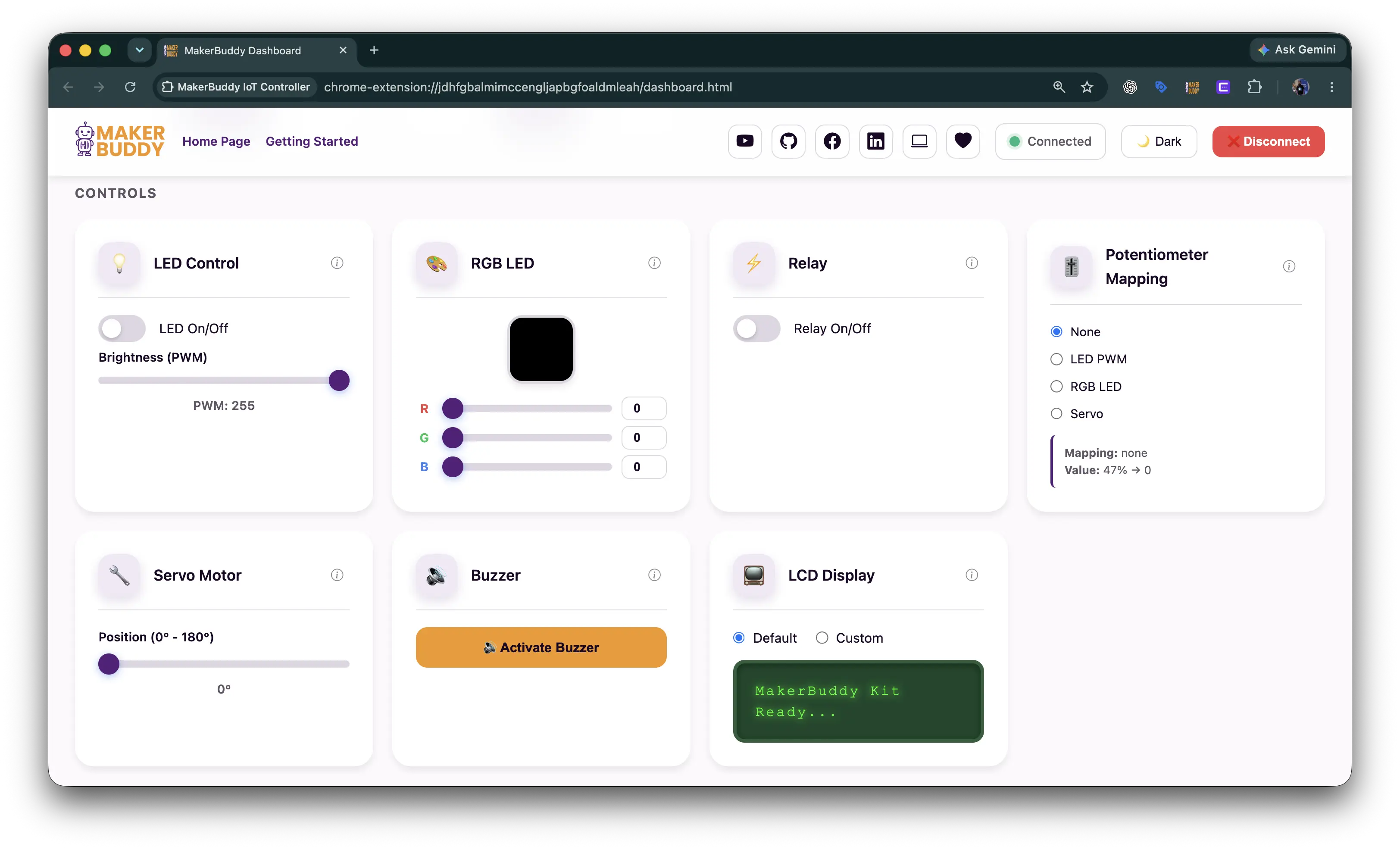
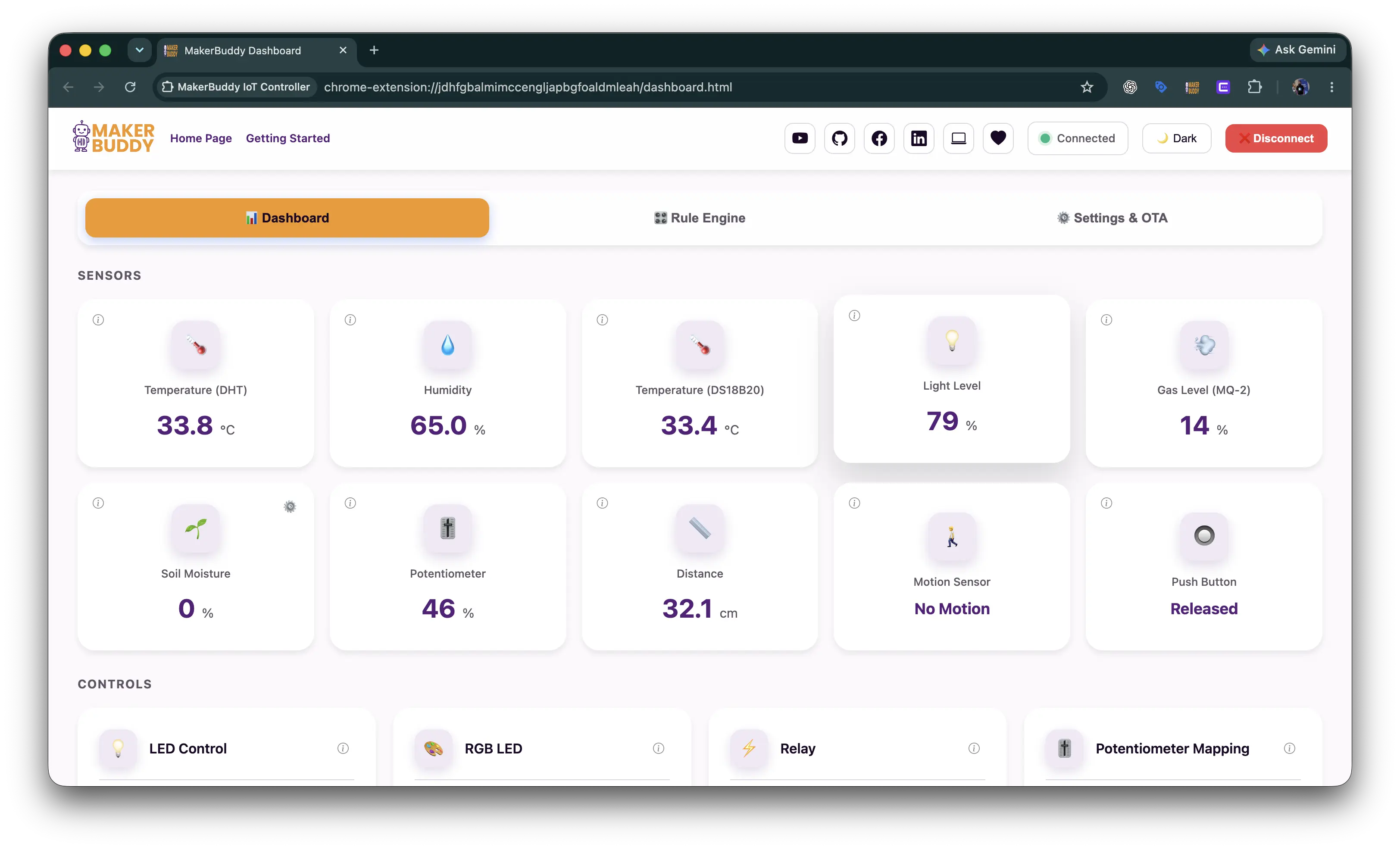
A real-time control center in the browser. Watch live sensor cards, flip actuators, and design automation rules — all over local Wi-Fi with zero setup.

A guided 32-week journey from first sensor reading to full IoT projects, with lesson plans, project ideas, and documentation built for the classroom.
No prior experience needed. MakerBuddy is built so the very first session ends with a working project.
Pick the MakerBuddy IoT Kit for an individual, or a classroom pack with curriculum for a whole school.
Plug components into keyed connectors and power up. You're connected in about two minutes — no setup, no drivers.
Open the web app, watch live data, control devices, and create automation rules — code-free to start.
Combine sensors into real projects, level up into coding, and share your inventions with the maker community.
A sensor measures something in the real world. An actuator makes something happen. MakerBuddy gives you both, already prepared to plug in.
One ESP32 learning board
Working the moment you power up
The things your project can feel
The things your project can do
Nothing you have to buy. This is the whole list.
Package contents can vary by production partner — the full hardware reference lists every component, pin and interface.
The same kit that introduces a 10-year-old to sensors can prototype a real IoT product. Here's what makes that possible.
Keyed connectors mean components only fit the right way. Students build in seconds instead of debugging spaghetti wiring for 40 minutes.
Live sensor values, actuator switches, and an LCD controller appear instantly in the browser — your invention on screen, sci-fi style.
Give a build a brain: 'if temperature > 30, turn on the fan.' No code needed to create real automation logic.
Everything runs on local Wi-Fi with no internet dependency — ideal for restricted school networks and younger learners.
Burn-proof protection, stable power, and no exposed pins keep shared kits alive through years of curious hands.
Firmware, hardware design files, and docs are open-source on GitHub — fork it, remix it, and grow into real engineering.
Bring hands-on robotics, electronics, and coding to your school with a full curriculum, lesson plans, and teacher support. Tell us your group size and timeline and we'll work out what you actually need — kits, training, or just the lessons.
Prefer to look first? Every lesson, guide and hardware document is public — nothing below is behind a form.
Schools, colleges & makerspaces across our service regions
We serve Pakistan, the USA, Canada, UK, Europe and the Middle East. Order by email and we will confirm the quote, shipping and timeline in writing before you commit.
Start a bulk order enquiryFour 8-week terms of 45–60 minute sessions, each with theory, a hands-on activity and a challenge. Read any lesson before you commit to anything.
Term 1 · Weeks 1–8
Understanding the ecosystem, electronics basics, digital inputs and controlling outputs.
8 lessons · weeks 1–8
Term 2 · Weeks 9–16
Converting physical phenomena — light, heat and motion — into data and mechanical movement.
8 lessons · weeks 9–16
Term 3 · Weeks 17–24
Detecting invisible hazards, reporting on visual displays and the core rule-engine loop modes.
8 lessons · weeks 17–24
Term 4 · Weeks 25–32
Creating smart automated systems with complex rules, capstone projects and a final expo.
8 lessons · weeks 25–32
Four samples across the year — the first session, a sensing lesson, the rule engine, and a two-part capstone build.
Whether you're teaching a class, raising a curious kid, or prototyping a product, MakerBuddy fits right in.
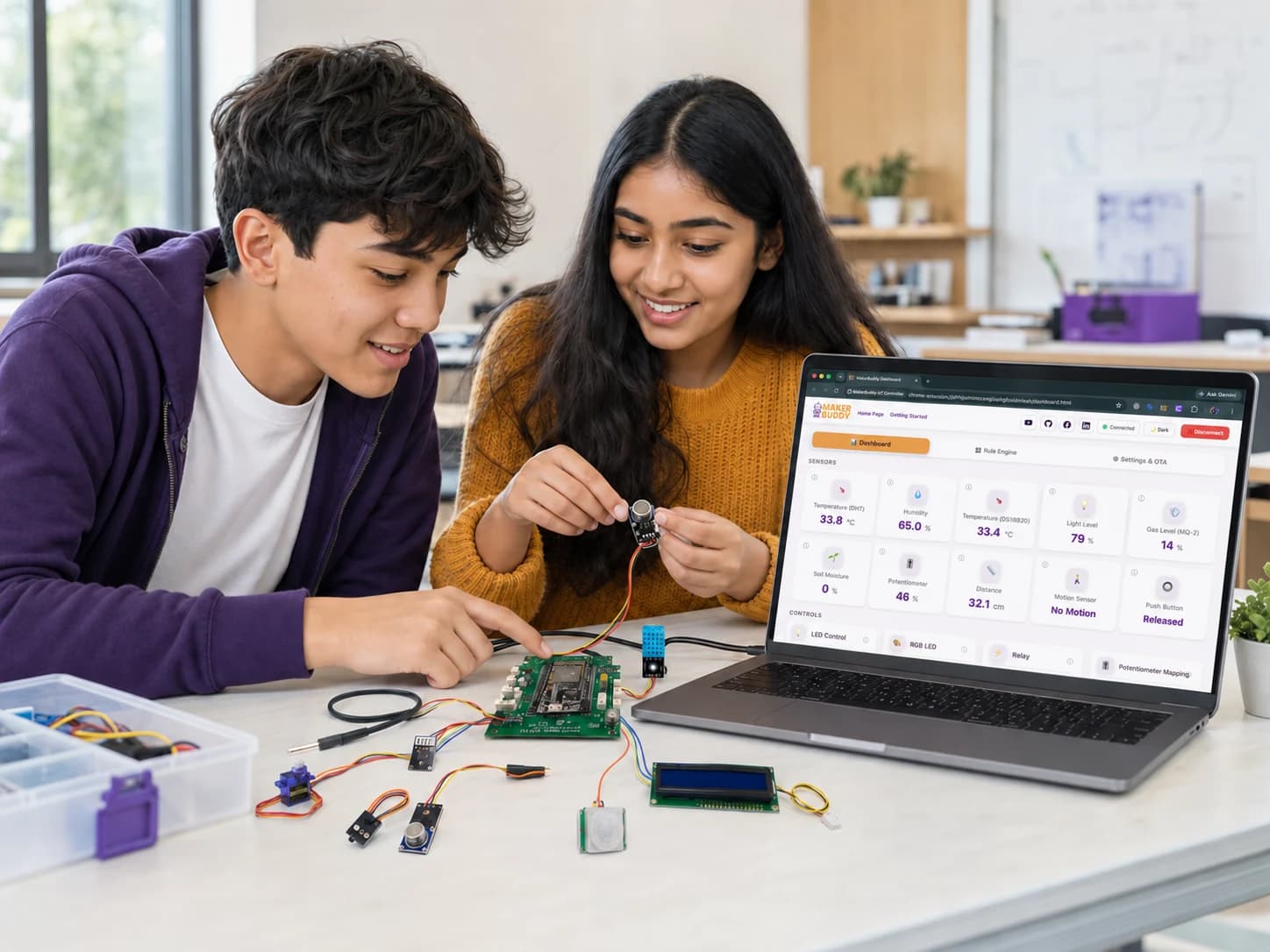
Dive into IoT without the frustration. Build cool projects instantly and learn by making.
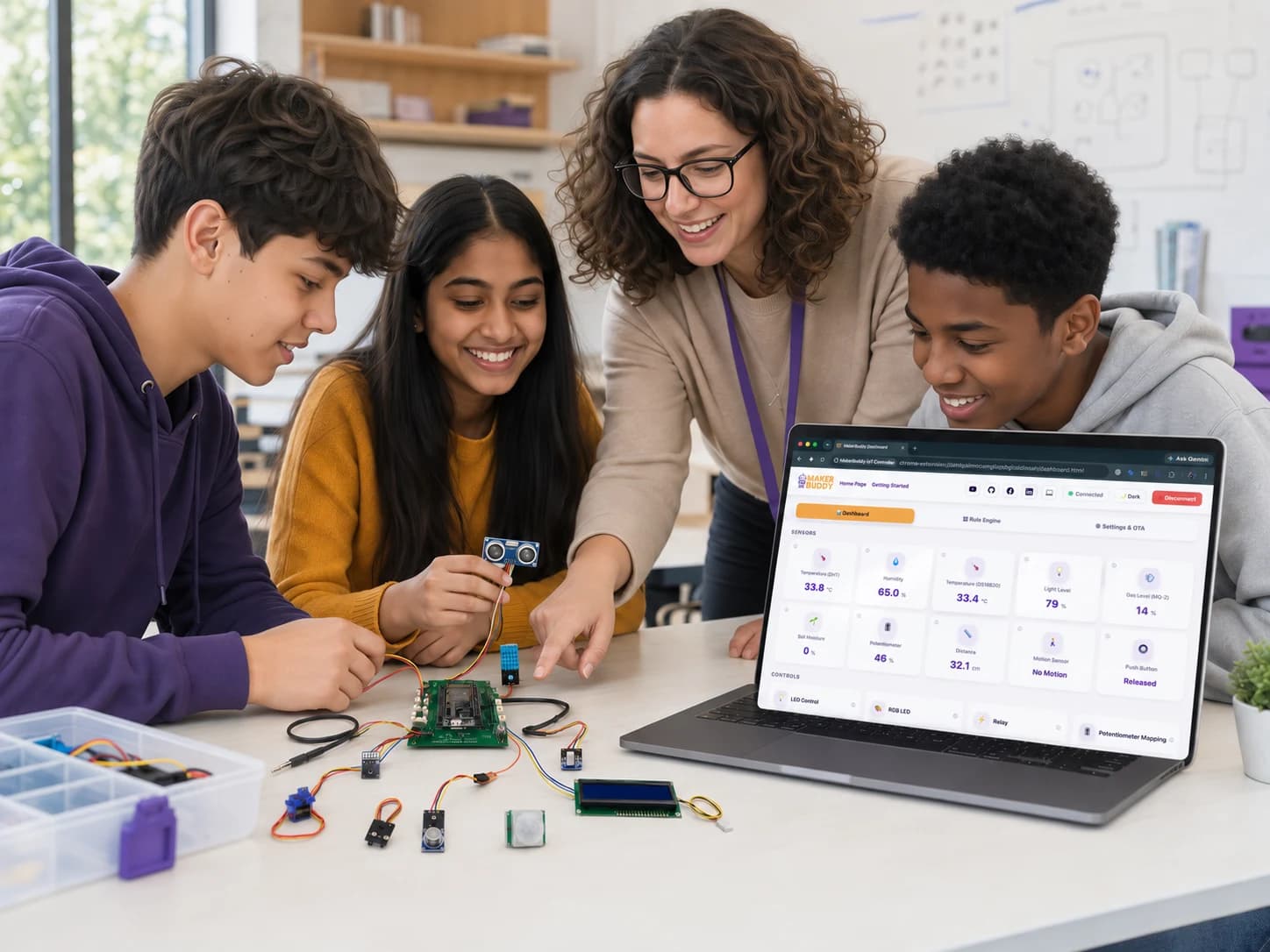
A complete STEM solution with reusable kits and free curriculum that fits any classroom.
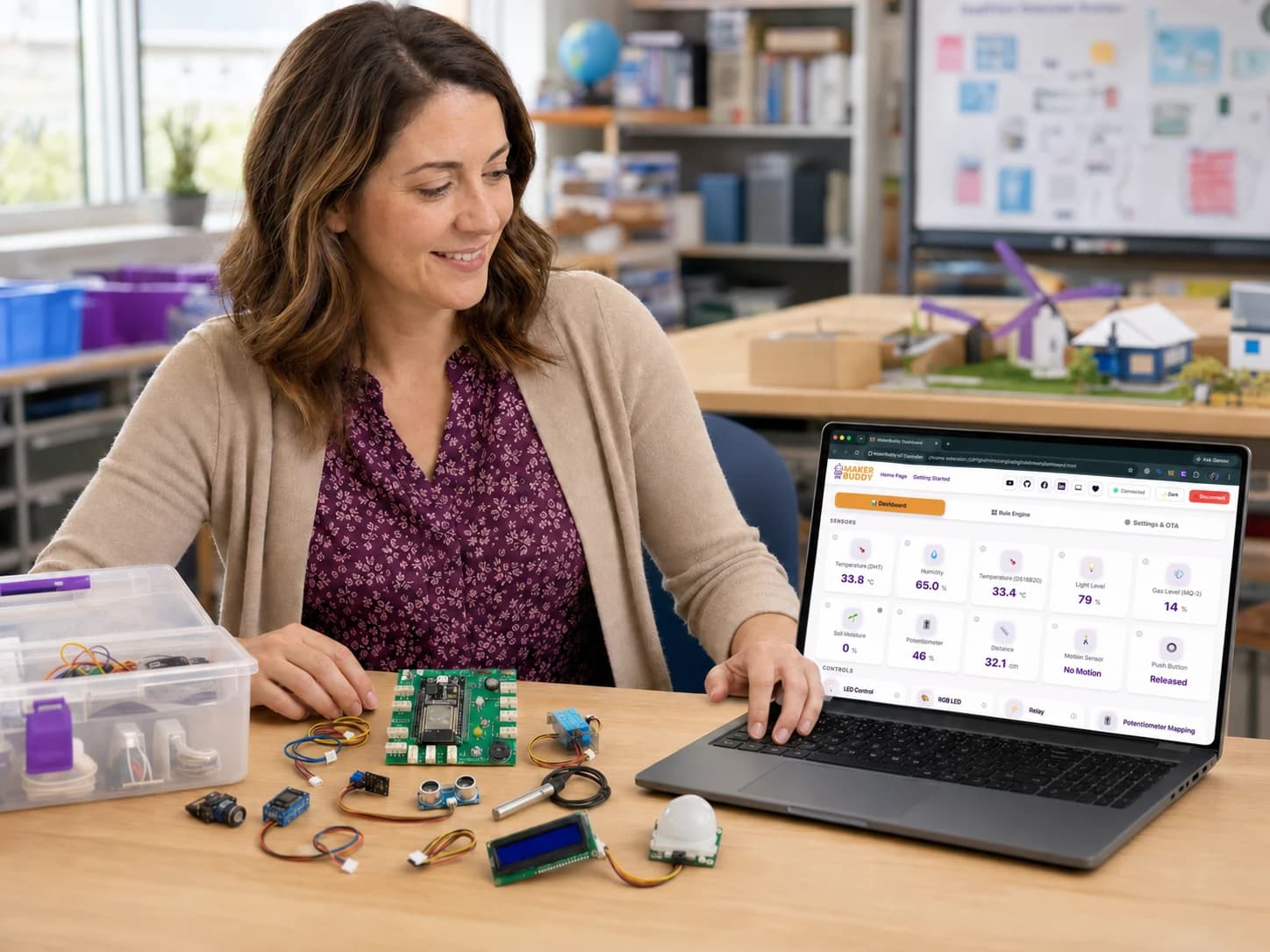
Zero prep time. Comprehensive lesson plans, guides, and teacher training included.
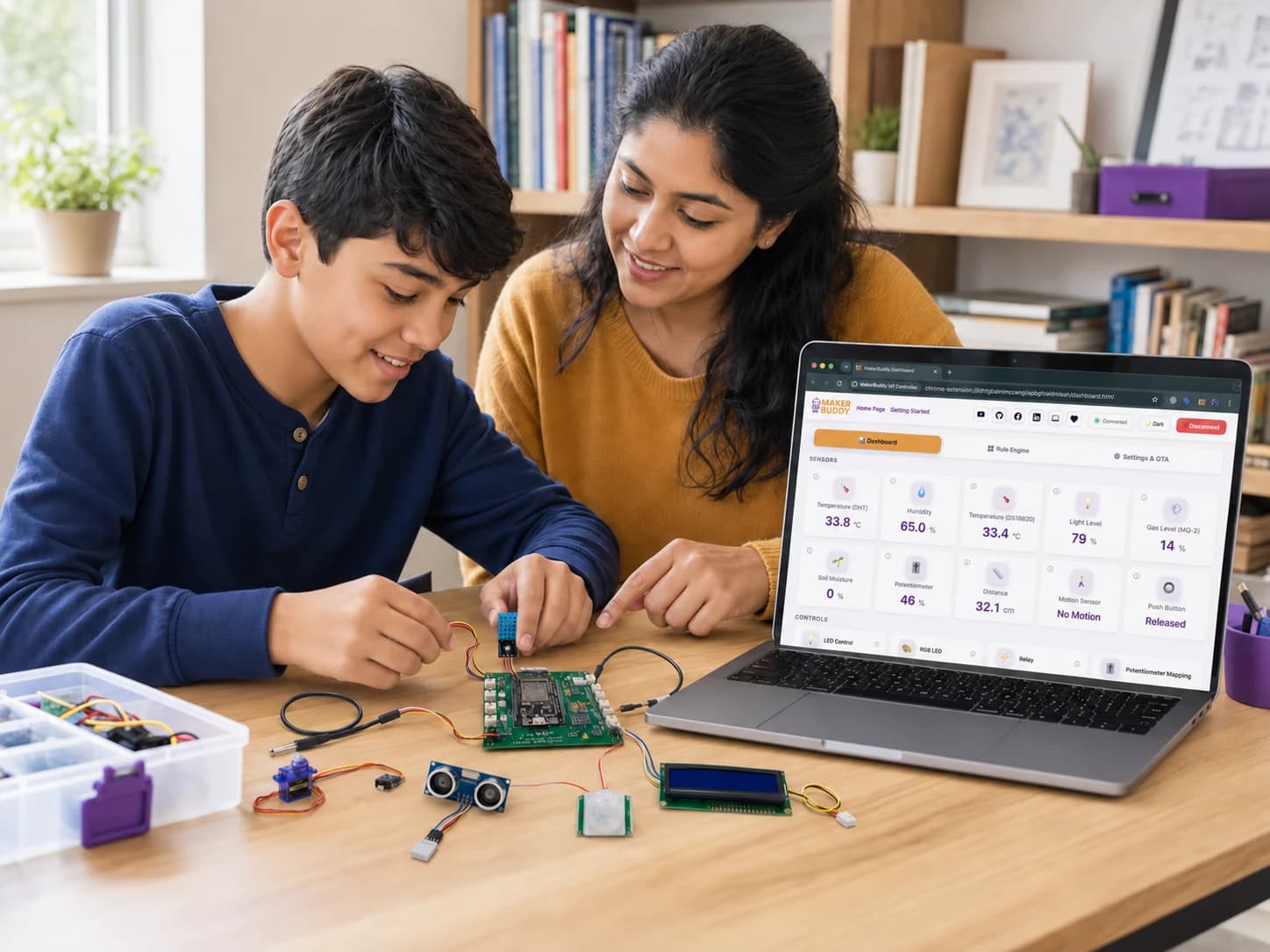
Give your child a safe, fun head start in technology, electronics, and coding.
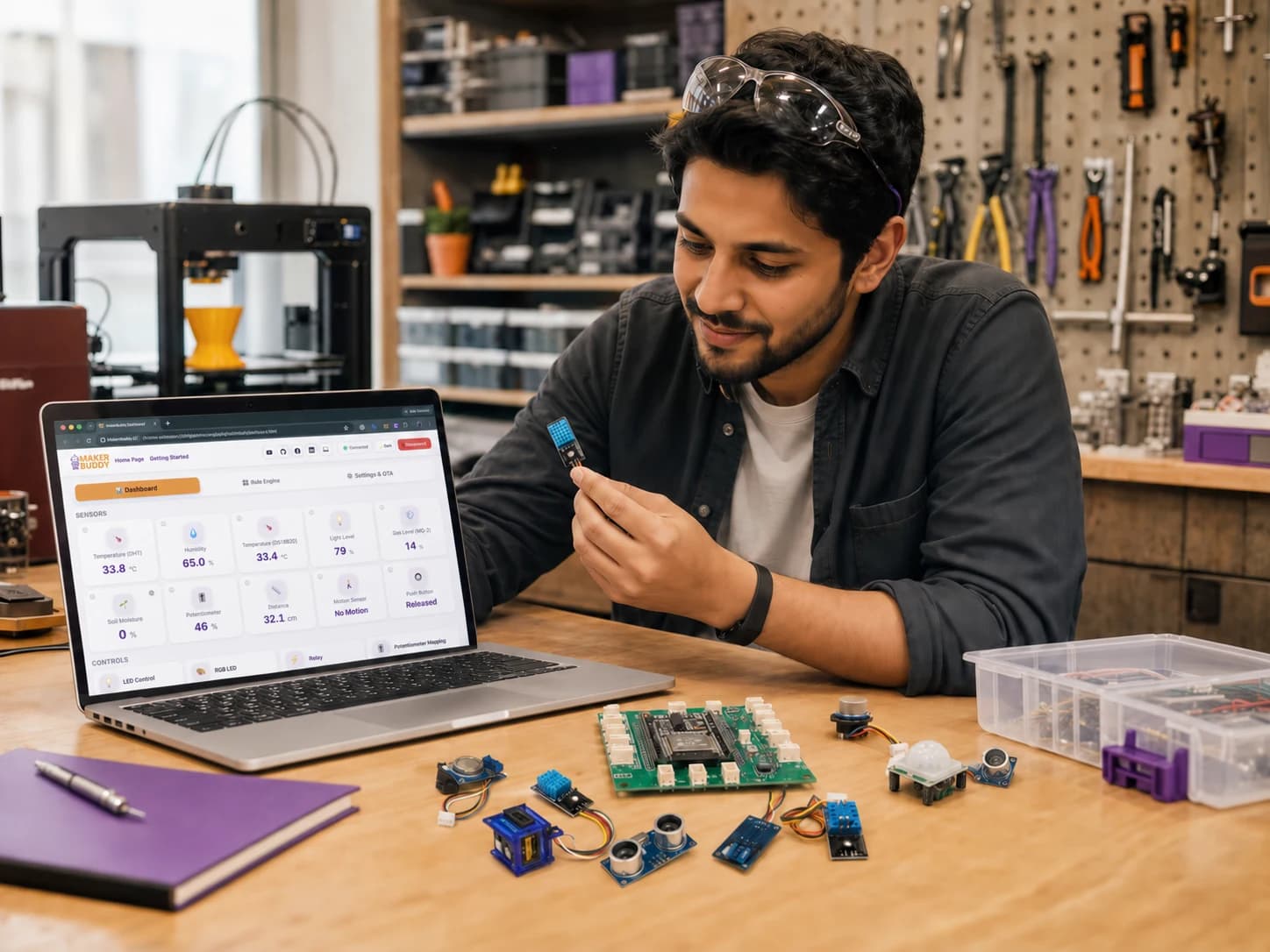
The modern 'Hello World' of electronics — safe, durable, and ready for workshops.
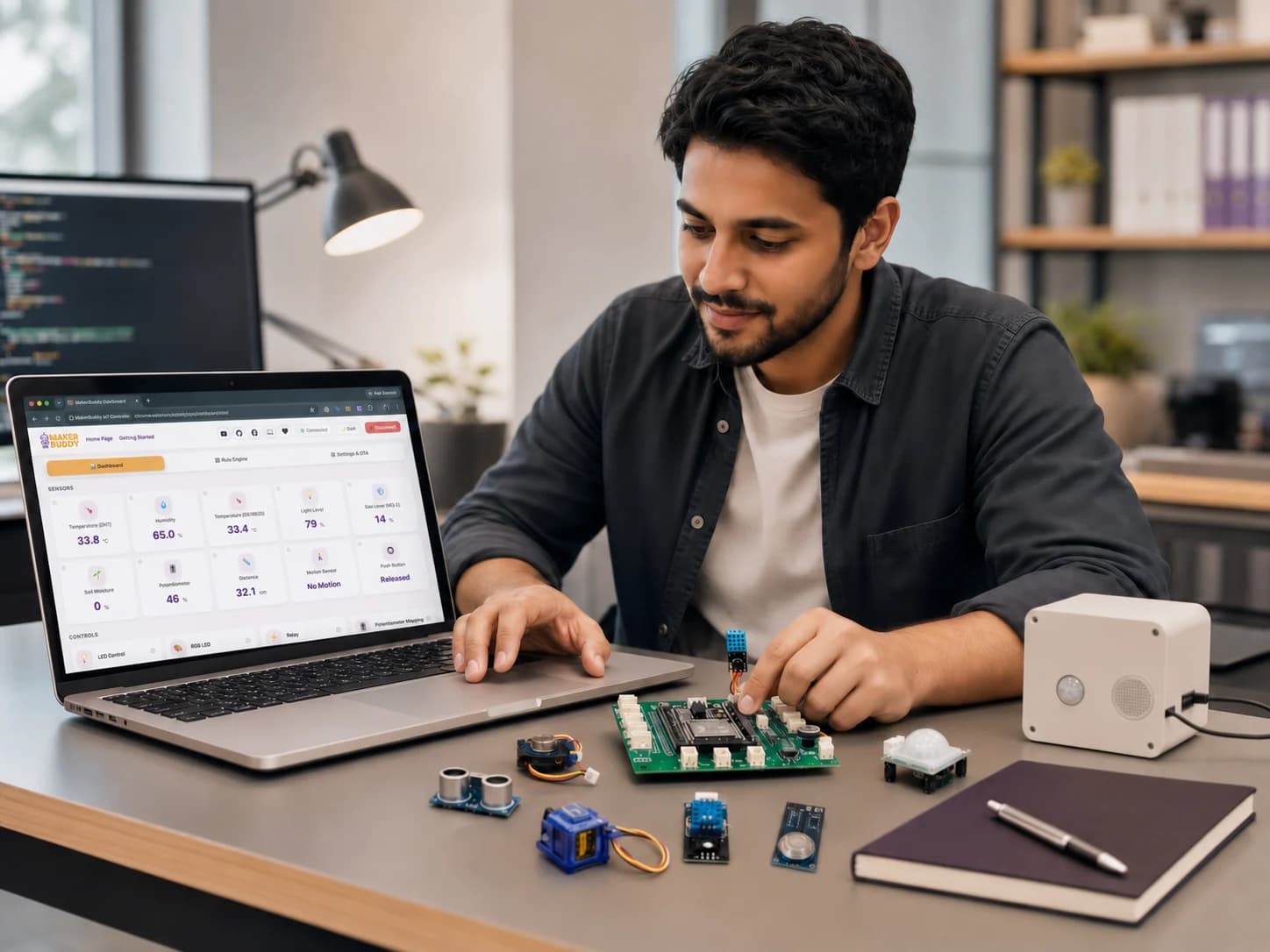
Prototype connected products faster with prepared hardware, local APIs, and an open platform.
Straight answers on cost, age, safety and what happens when something breaks.
No. The first projects are built entirely in the browser dashboard — you read live sensor values, flip switches and write rules like 'if temperature is above 30, turn on the fan' without writing a line of code. Arduino code and the open API are there when a learner is ready for them, not before.
The curriculum is written for ages 10 and up, in 45–60 minute sessions. Younger learners work through the dashboard with an adult nearby; secondary students and hobbyists can go all the way into firmware and APIs on the same board.
Neither. The board creates its own connection over local Wi-Fi and the dashboard runs in any browser at the board's address. Nothing is downloaded and no data leaves the local network, which is what makes it workable on restricted school networks.
In Pakistan, kits are produced with our partner OR97 and current price, stock, delivery and warranty terms are on their product page. Customers and institutions in the USA, Canada, UK, Europe and the Middle East can order by email and we will confirm price, shipping and delivery in writing. The hardware is also fully open-source, so you can use the published schematics, bill of materials and firmware to source parts locally.
Yes. We serve institutions in the USA, Canada, UK, Europe and the Middle East. Email info@makerbuddy.cc with your institution, country, delivery city, number of kits and required date, and we'll send a written quote covering the kits, shipping and timeline. Volume discounts run 2% from 10 kits, 5% from 25 and 8% from 50, and the larger packages add curriculum support and teacher training.
Most schools run one kit per two or three students, which keeps everyone hands-on during a 45-minute session — a class of 30 usually lands at 10 to 15 kits, not 30. Tell us your group size and timeline and we'll help you work out a sensible number rather than sell you one per head.
Modules connect through standard keyed connectors and are replaced individually — a damaged sensor doesn't retire the board. The connectors are polarity-aware and the power rails have reverse-polarity and over-current protection, which is what stops the usual classroom mistakes from costing you hardware.
The board runs on 5 V USB power with no exposed mains voltage and no loose pins. The relay is intended for low-voltage educational loads only — students must never connect mains electricity, and the curriculum and documentation state this at every point where the relay appears.
No. All 32 weeks of lessons, the teacher guides, the project library and the documentation are free and public on this site, whether or not you buy a kit from us.
Still have a question we haven't answered?

Join the students, schools, and makers turning curiosity into real inventions — no wiring, no setup, no limits.
Teaching a class? Request a school quote or read the free 32-week curriculum.